The Signorellis - Doltone House
When a 19 year old Sicilian stepped on to a Pyrmont Wharf in 1954, he couldn’t have dreamed that he would leave his children and grandchildren an incredible Sydney waterfront legacy and that they would take it to a new level.
The sibling banter between them is endless, teasing and at times, hilarious. Nina, Paul and Anna are holding forth with memories of growing up in a Lakemba fruit and vegetable shop. Anna was convinced that all Australians could do with vegetables was to boil them. “They’d smell the eggplant cooking out the back and we’d have to educate them about what it was and how to cook it. The same with the artichokes,” she says.
Their mother, Fina, was more likely to be cooking the vegetables for an after school meal rather than trying to teach the customers that there was more to life than pumpkin or cabbage. It was all part of the ongoing learning curve for migrants coming to terms with a new language and culture.
Paul recalls his father, Biaggio, teaching them how to use the metallic beast of a cash register, serve customers and give correct change from the age of six. But, only after they’d finished their homework. He laughs now as he labels what have turned out to be valuable business lessons. Such as supply and demand. “Everything was pretty much seasonal then, none of this all year round availability,” Paul says. Then there were the merchandising lessons. “Never put the expensive stuff within reach so they could squash it and handle it. Risk management would involve whether to buy extra tomatoes at a good price and waste management meant dad would buy 24 bags of fresh peas and we’d have to shell them all and bag them,” Paul says. A business deal hinged on Biaggio’s handshake. These days it always involves a legally binding contract.
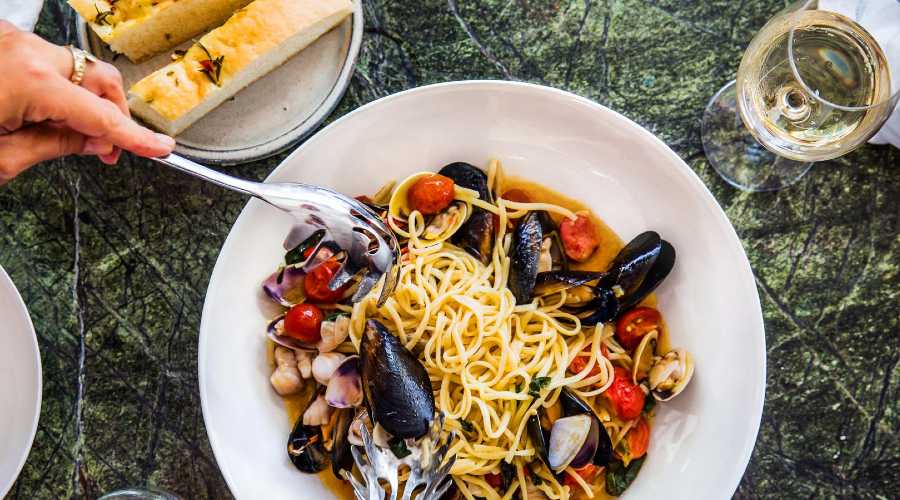
We are sitting in a beautiful spot in Sydney’s Pyrmont, Signorelli Gastronomia, a stone’s throw from the water and smack bang in the main tourist precinct. The food arriving on the table is superb – top notch antipasti; handmade gnocchi that are meltingly tender and smothered with four cheeses; seafood pasta that rocks the tastebuds with its freshness and; mushroom risotto bursting with funghi and a perfect, moist consistency. And, there is no escaping an affogato made with homemade vanilla ice cream and excellent espresso, not to mention the jelly bubble that bursts on contact with the tongue and releases a shot of Frangelico. “Dive in,” says Anna. “Eat it like an Italian!” But, for the Signorellis, this restaurant and gourmet food outlet is not the core business. Rather, it is more of a tribute to the man whose statue stands at the front of the building.
Cast in bronze is Paul, Nina and Anna’s parents, Biaggio and Fina Signorelli and their seven grandchildren. The statue was unveiled by NSW Governor, Marie Bashir; Premier Kristina Keneally and Opposition Leader, Barry O’Farrell. Titled
“Life From a Suitcase,” it is a gift from the Signorellis to celebrate all migration. There is a very special significance for them though. Pyrmont Wharf 12 is the spot where Biaggio first set down his suitcase as a 19 year old from Poggioreale in Trapani, Sicily. He would go on to own a considerable slice of this beautiful waterfront real estate with the Doltone House group.
In May 2008, Biaggio died in his son Paul’s arms from the cruel asbestos-related cancer, Mesothelioma. His funeral saw over 4000 people crowd St Mary’s Cathedral, including the Premier, government ministers and senators. Nina, Paul and Anna had inherited an incredible empire. The doubters were out of the woodwork very quickly. “People said we just wouldn’t make it,” Nina says. But, there was never an assumption by the siblings’ that they would become part of the business in the first place. Once they’d finished their educations, they headed into different career paths, until tragedy put them together to not only preserve their father’s legacy, but to expand on it considerably.
Biaggio Signorelli arrived in Sydney in 1954. He was the youngest of five boys and found a job at a greengrocer’s in Willoughby. Biaggio didn’t speak English, but he bought his own fruit shop in Lakemba in 1964 and named it Antonella after his mother. He married Fina in 1967 and the three children followed. So too did the rest of the Signorelli family with Biaggio’s four brothers and mother also arriving from Sicily. In their home village, they had been barbers and shoe repairers and they continued with that on arrival. “Dad’s favourite saying was that you should do what you know best,” Paul says.
Biaggio’s fruit and vegetable business had exposed him to the wholesale hospitality market, but rather than simply supply the produce, in 1973 the family purchased the Clarendon Ballroom in Riverwood. Biaggio was now taking larger phone orders and at weekends he did waiting shifts to pay off his house. In 1974 he took another innovative business step by buying a department store in Lakemba and expanding the fruit shop into a self service concept. In 1988, the Signorellis opened Mother Nature’s Fruit World, one of the first fresh food emporiums that carried liquor, fruit, deli goods, a newsagent, fish market, bread shop and butcher. “He’d gone from food on the shelves to food on the plate by catering weddings at the function centre,” Paul says. “We’ve gone back to that by including Signorelli Gastronomia and the Biaggio café into the Pyrmont business.”
In 1990, Paul was involved in a serious car accident. In a coma in intensive care and with a long recovery in front of him, Biaggio didn’t hesitate. “Everything went on hold so dad could care for Paul,” Anna says. “It was family first and business second.”
The family bounced back with a passion in 1995 when they purchased freehold land and the business, Doltone House, at Sylvania Waters. The reception/catering empire was under way. Within two years, this centre became the place to be and the Signorellis looked for the next challenge. They found it in 1999 by winning the tender to occupy the former Sydney Harbour Casino site at Darling Island Wharf. Not enough of a challenge obviously, since in 2001, they bought the freehold on the heritage-listed woolshed at Jones Bay Wharf and by 2004 opened it as an event centre, with the then Premier, Bob Carr, cutting the ribbon. The Signorellis had just started. In 2006, they acquired The Castle in Blakehurst, a waterfront estate with acreage for a boutique, resort-style function venue complete with bushwalks and boating.
Then, tragedy struck. In September 2007, Biaggio was diagnosed with mesothelioma. The family can only surmise that he had contracted the fatal disease when he personally carried out the renovations in some of the older buildings he had first acquired in Lakemba. “He liked to do his own renovations,” Paul says. The siblings came to an agreement. Nina and Anna would step in to oversee the business, while Paul spent his time with Biaggio as he had done after Paul’s accident. Eight months later, Biaggio died in Paul’s arms and his last words to his son were: “Grow the business, look after your family and help to save others.” Paul says that he felt an extremely strong sense of responsibility and that he and his father had been given the time to discuss business succession plans with Paul taking up where Biaggio left off. Nina takes charge of all financial matters, while Anna runs the sales and marketing team. “We were never sheltered from reality,” Nina says. “We do have outside advisors who we call on to help facilitate the running of the business.” But, Paul and his sisters didn’t let the grass grow under their feet.
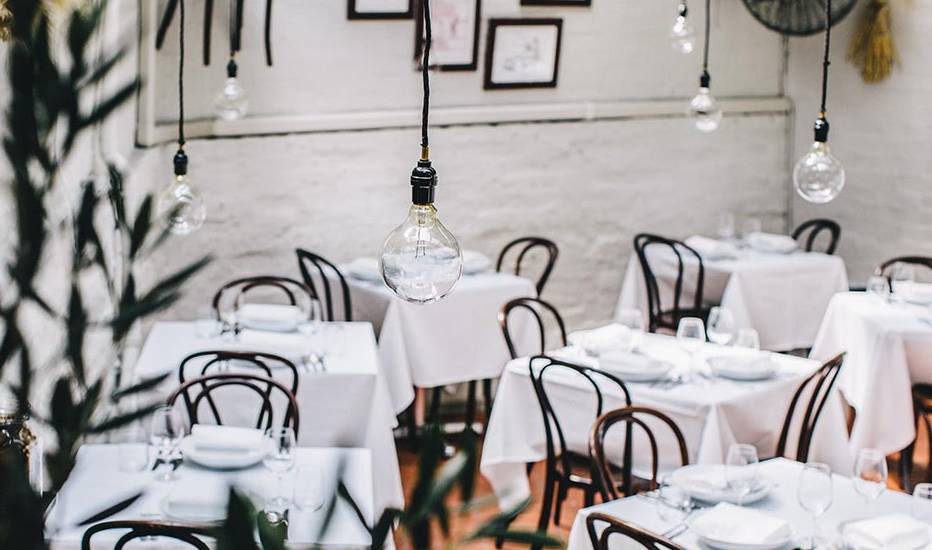
Biaggio was farewelled in early June 2008 and in the same month, the Biaggio Signorelli Foundation for research into a cure and treatment for asbestos cancer was launched. In July, Paul had commissioned renowned Australian artist, Terrence Plowright, to sculpt the life-sized statue at Pyrmont Wharf 12. By August of that year, the Signorellis won a tender to develop NSW’s first six star green building at Darling Island (the site of Pyrmont Wharf 12) followed in December with the purchase of a 40 acre waterfront site at Deepwater Park, Panania. In April 2009, they were given approval to develop the 800 person event centre, 140 seat café, 200 person convention centre and the 300 square metre food emporium, Signorelli Gastronomia. It opened to the public in October 2009, with the food emporium up and running by February last year. A month later, the statue of Biaggio, Fina and the grandchildren was unveiled. In July 2010, Doltone House won the national Australian Business Award for environmental sustainability.
While the family is busy developing its other sites, running 200 staff and raising their seven children, they continue to raise funds for asbestos cancer research. So, is there a formula for how this second generation has built on their father’s legacy? Anna’s sense of humour comes to the fore again when she says: “We turned Doltone House from the old ham and pineapple and bad ice cream form of catering to actually catering for the market.” They brought a la carte menus into the catering area. However, they also remembered cultural differences and recognised its renewed importance in today’s society. Doltone House weddings and functions are particularly noted for their ability to accurately cater for a myriad of different cultural requirements, not just Italian.
The third generation is now no stranger to the business either. While Paul, Nina and Anna agree that their children must be given their own choices in regard to their future, they have also had to instill in them what it takes for their parents to run such an empire – the long hours and work/life balance. Whenever they do visit Pyrmont’s Wharf 12 though, they always stop at the statue and say “hi” to nonno.